Relevance in marketing now depends on timing more than volume. On platforms like TikTok, trends surge and fade within days, sometimes hours, leaving brands that hesitate to appear out of step rather than in sync. Conventional ad production, with its drawn-out timelines and approval layers, struggles to match this pace. AI ad generators solve this by letting marketers convert real-time cultural moments into high-performing video ads almost instantly, all while preserving brand identity and creative integrity.
Post Contents
From Observers to Participants
Historically, brands approached trends reactively. They monitored social feeds, held internal brainstorming sessions, coordinated with agencies, and launched campaigns days, or even weeks after a meme had peaked. The result was often content that felt out of step, even when technically polished. Today’s audiences, especially on TikTok and Instagram Reels, reward immediacy over perfection. A slightly rough but timely video promo that taps into a live cultural moment can generate more engagement than a studio-produced AI commercial released too late.
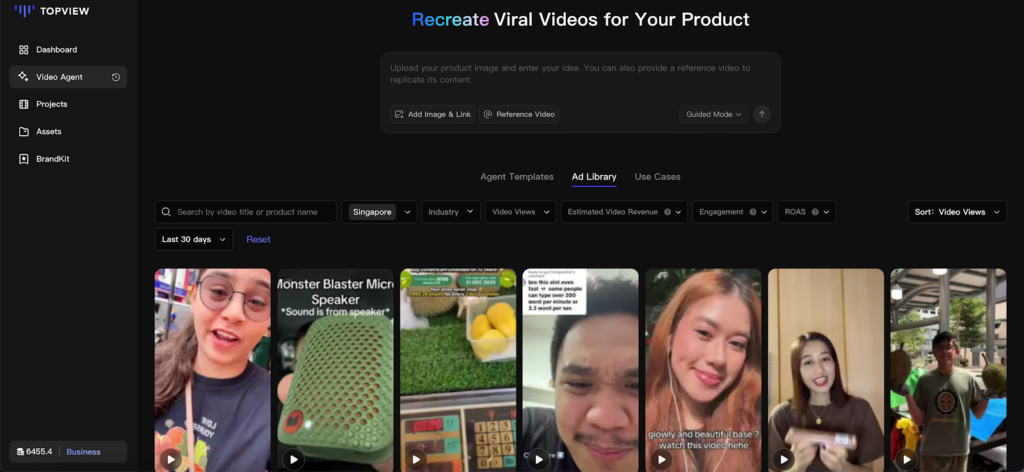
AI ad generators flip this script by collapsing the timeline between inspiration and execution. Instead of waiting for approvals and shoots, marketers can feed a trending reference video into an AI system, input their product details, and receive a brand-aligned version that mirrors the original’s structure, pacing, and emotional tone. This isn’t copy-paste creativity, it’s adaptive reinterpretation at scale.
The Anatomy of a Real-Time AI Commercial
What makes this possible is the underlying intelligence of modern AI agents. These systems don’t just stitch together clips; they deconstruct why certain videos go viral. They analyse shot rhythm, hook placement, transition styles, audio cues, and narrative arcs to extract what Topview calls the “creative DNA” of a trend. Once understood, that blueprint is reapplied to a brand’s own assets (product images, logos, taglines) to produce a fresh video that feels native to the platform yet unmistakably branded.
For example, imagine a viral TikTok trend where users showcase everyday objects being “transformed” through dramatic lighting and slow-motion reveals. An e-commerce brand selling skincare can use an AI ad generator to replicate that exact visual language, but with their serum bottle as the hero. The AI handles lighting simulation, camera motion, text overlays, and even voiceover tone, all while adhering to the brand’s colour palette and messaging guidelines.
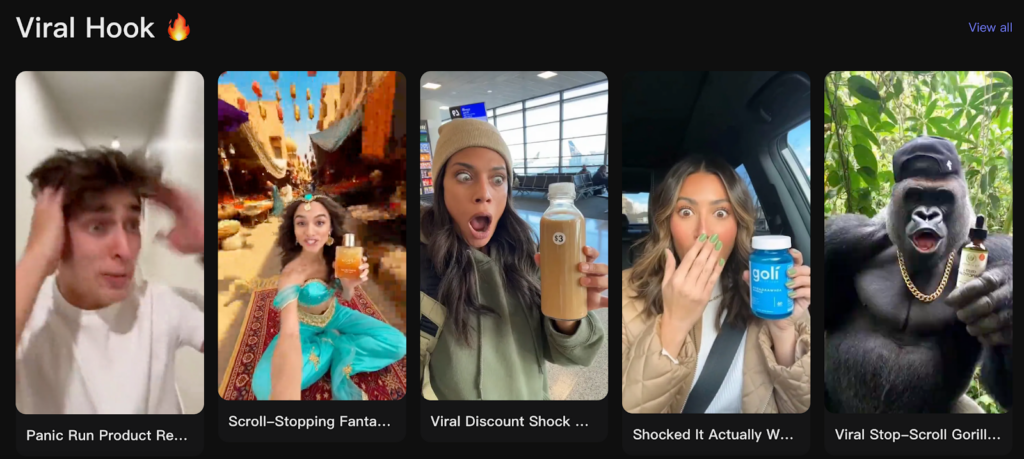
This capability is particularly powerful for generating TikTok ads and short-form video ads across Instagram Reels and YouTube Shorts. Because these platforms prioritise early adopters of emerging formats, speed directly translates to organic reach and lower cost per acquisition.
Scaling Authenticity Without the Overhead
One common concern is whether AI-generated content can feel authentic. The answer lies in strategic curation, not automation alone. AI ad generators excel at handling the mechanical aspects of production: editing, resizing, syncing audio. This frees human creators to focus on tone, nuance, and cultural alignment. Marketers become curators and directors rather than editors and coordinators.
Moreover, these tools democratise access to high-quality video promo creation. Small DTC brands that lack in-house creative teams can now produce UGC-style video ads that mimic the look and feel of top-performing organic content. With features like AI UGC avatars and synthetic voiceovers, even talent-dependent formats become scalable. A single product URL can yield dozens of variants tailored to different demographics, regions, or campaign objectives—all generated in minutes.
Beyond Replication: Anticipating the Next Wave
The next frontier for AI ad technology is predictive creativity. While current systems excel at recreating existing trends, emerging models are beginning to forecast which formats, sounds, or visual motifs are likely to trend next. By analysing micro-signals, such as rising hashtag velocity in niche communities or unusual engagement spikes on experimental content, AI can secure opportunities before they hit the mainstream.
This shift from reactive to proactive strategy could redefine how brands approach campaign planning. Instead of scrambling to catch up, they’ll be able to seed content just as a trend begins its ascent, maximising visibility and minimising wasted spend. In this future, the AI commercial isn’t just fast, it’s foresighted.
A New Creative Partnership
Critically, this evolution doesn’t diminish the role of human creativity. If anything, it elevates it. By offloading repetitive tasks to AI, marketers reclaim time for strategic thinking, storytelling, and cultural insight. The most successful teams will be those that treat AI not as a replacement but as a collaborator. One that handles the “how” so humans can focus on the “why.”
This partnership is already yielding results. Brands using AI ad generators report up to 10 times faster production cycles, 80–90% cost savings compared to traditional shoots, and significantly higher engagement rates on trend-aligned video ads. More importantly, they’re building a reputation for cultural fluency, showing up not as advertisers, but as active participants in the digital conversation.
Conclusion
The era of static, seasonal campaigns is over. In its place is a dynamic, always-on model where relevance is earned through speed, adaptability, and authenticity. AI ad generators are the engine making this possible, turning cultural moments into measurable business outcomes with unprecedented efficiency.
For marketers navigating the chaos of 2026’s attention economy, the question is no longer whether to adopt AI—it’s how quickly they can integrate it into their creative rhythm. Because in the race for relevance, the fastest brand doesn’t just win attention. It becomes part of the culture itself.